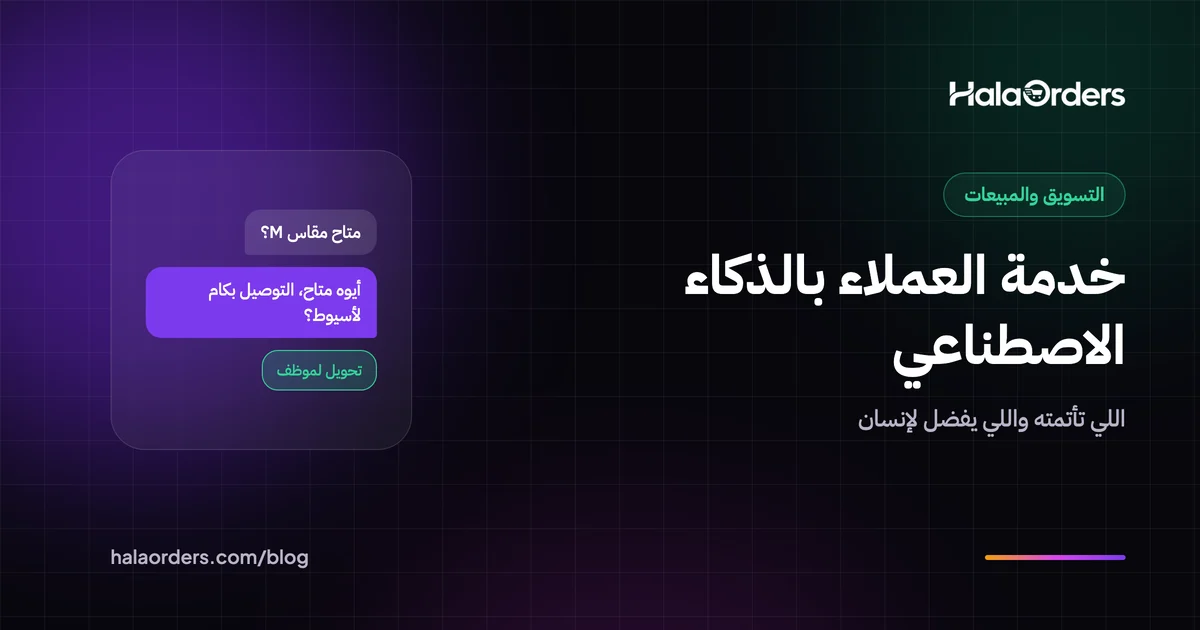
It is 11 p.m., and you have 4 messages on Instagram: "price?", "is size M available?", "how much is delivery to Assiut?" and "my order is late". If you reply to each one as it arrives, you will be holding your phone all day. And if you leave them until morning, half of those customers will have bought from someone else.
That is why AI customer service has become one of the things merchants ask about most. But before you install a chatbot, you need to know the tools that actually exist, what you can automate, and what will lose you a customer if you leave it to a bot. We go through Gorgias, Tidio, Siena AI, Meta's tools and WhatsApp Business.
In short: an AI customer service chatbot is a program that answers customers' frequent questions (price, size, shipping, order status) in chat or messages, and hands the conversation to a staff member when the question gets complicated. Start with the free Meta and WhatsApp Business tools (a greeting message and quick replies), then consider a paid tool, and leave anything involving money, complaints or exceptions to a person.
What is an AI chatbot?
A chatbot is a program that talks to the customer in writing instead of a staff member. There are two very different types:
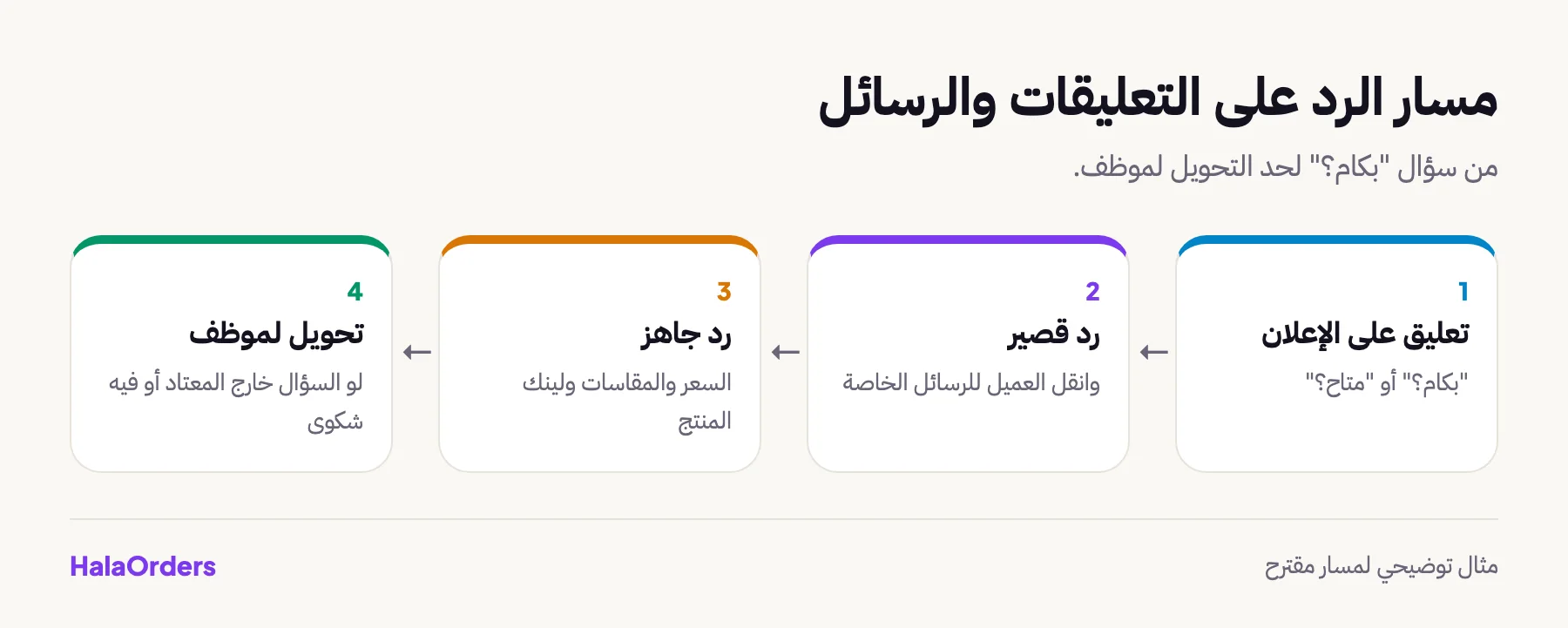
- A rule-based bot: the customer taps an option (orders, shipping, exchange) and the bot responds with a pre-written reply. It doesn't understand free text.
- An AI bot (AI agent): it reads the customer's question in their own words, answers from the information you entered (policies, products, FAQs), and hands over to a staff member if it isn't sure.
The second type is more powerful, but riskier: if it isn't set up well, it can give a wrong answer with confidence (what is called a hallucination), and you are the one held responsible in front of the customer.
What are the best-known AI customer service tools?
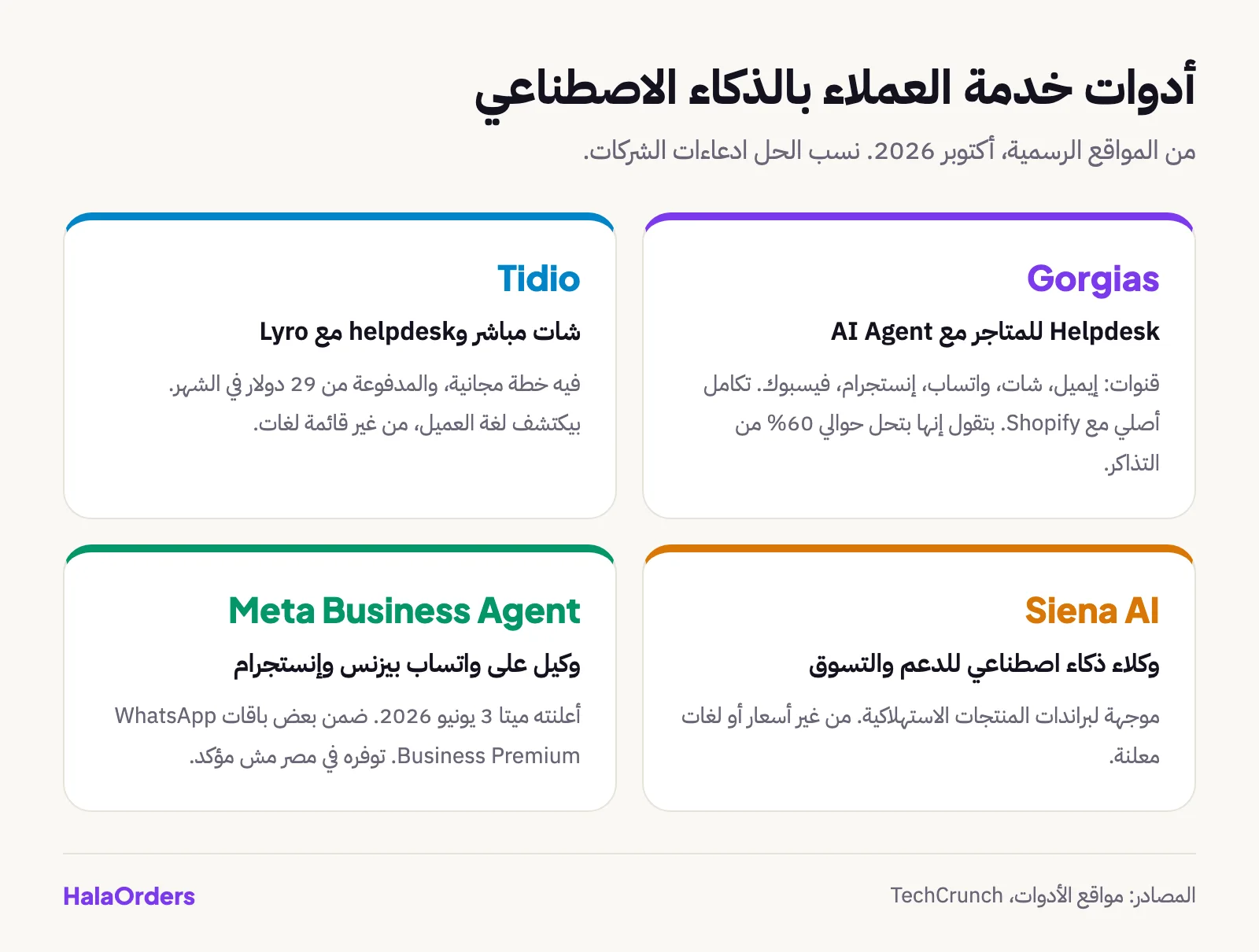
The information comes from the tools' official websites in October 2026. The figures claiming a "resolution rate" are the companies' own claims, not independent studies.
| Tool | What it does | Notes from its website |
|---|---|---|
| Gorgias | A helpdesk for stores with an AI agent that answers routine inquiries | Says it resolves about 60% of tickets. Channels: email, chat, SMS, WhatsApp, Instagram, Facebook. Native integration with Shopify |
| Tidio | Live chat and a helpdesk with an AI agent called Lyro | Has a free plan, and the paid plan starts at 29 dollars a month according to its website. Says it detects the customer's language and replies in it, without listing the languages |
| Siena AI | AI agents for support, shopping and social media | Aimed at consumer product brands. Claims automation of up to 80%. No published prices or listed languages |
| Meta Business Agent | An AI agent on WhatsApp Business and Instagram | Announced by Meta on June 3, 2026; answers questions, recommends products and hands over to a person. Available in some WhatsApp Business Premium subscription tiers |
Do they support Arabic and Egyptian?
That is the question you need to ask before anything else. The Gorgias, Tidio and Siena websites don't explicitly mention Arabic, and Tidio only says it detects the language. As for Meta Business Agent, the press coverage of its global launch has no list of languages or countries, so don't assume it is available in Egypt and in the Egyptian dialect until you check inside your own WhatsApp Business account. Test it with real questions in Egyptian Arabic ("can this be washed?", "where is my order?") before you pay.
And one important point: Gorgias and Siena are designed mainly around Shopify stores and specific platforms. If your store is on another platform, ask the tool whether it integrates with it before subscribing.
Start with the free tools: WhatsApp Business and Meta
Before any subscription, nothing is cheaper than ready-made reply tools. According to the official WhatsApp Business page, merchants can "greet customers as soon as they start a conversation" and "reply to messages even when you're away". The WhatsApp Business app itself has saved Quick Replies and Labels for conversations. And in Meta Business Suite you find Facebook and Instagram messages in one inbox, with simple automatic replies (an instant reply and an away message).
That covers most of what a small store needs: a greeting message stating when you reply, a ready reply for every frequent question (delivery, exchanges, payment methods), and the store link.
How do you reply to comments and DMs systematically?
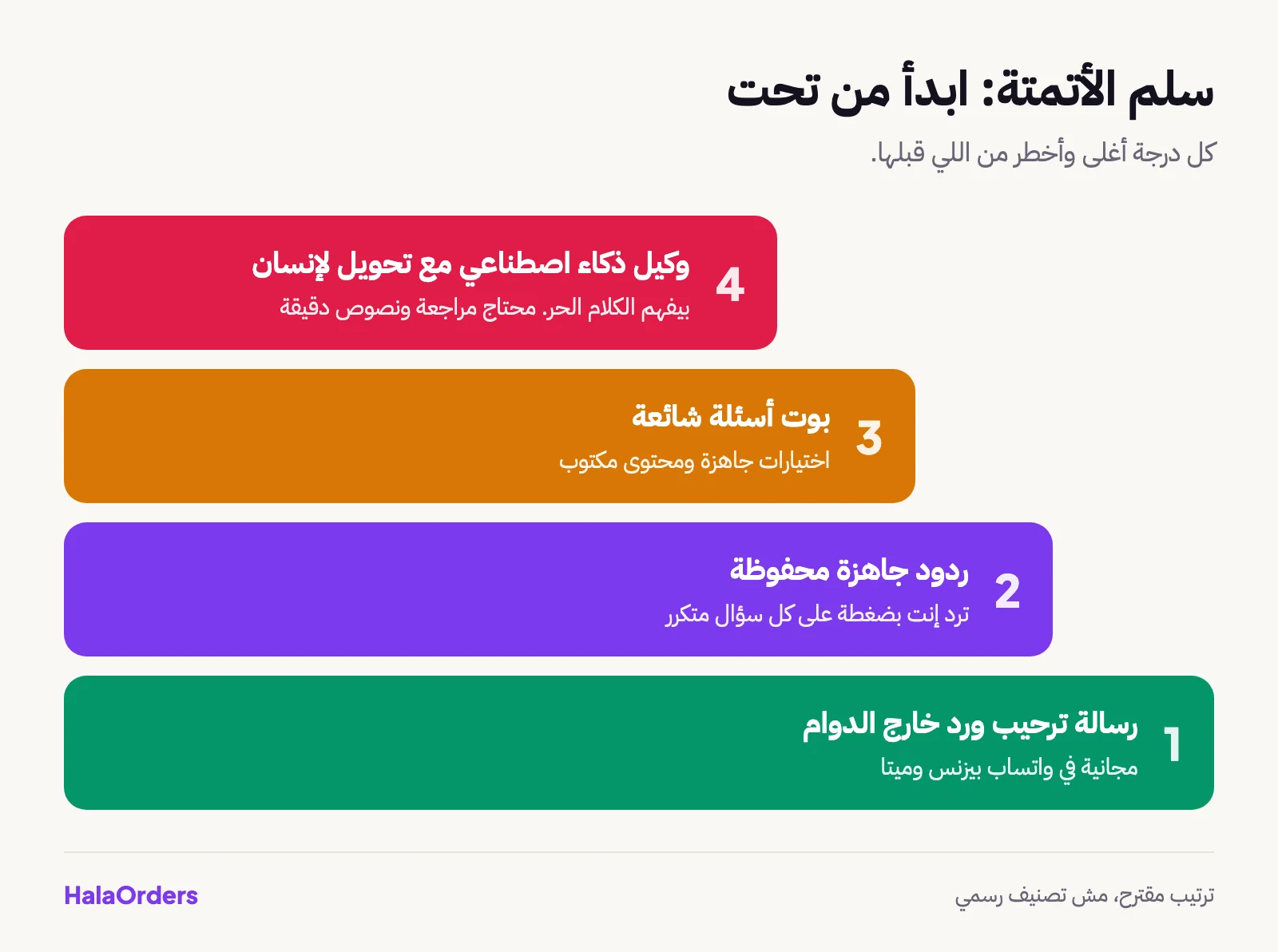
Most "how much?" questions come in ad comments. The rule that works:
- Reply to the comment with a short sentence and move the customer to private messages ("we've sent you the details in a DM").
- In the DM: a ready reply with the price, the sizes and the product link.
- If the customer asks about something unusual (a complaint, a special request), it goes to a named staff member.
- Write your frequent questions in one file, and that becomes the basis for your quick replies and for the bot if you use one.
If your frequent questions are already written down, use them as input for ChatGPT when preparing replies, as we explained in using ChatGPT in e-commerce.
What should you automate and what should you leave to a person?
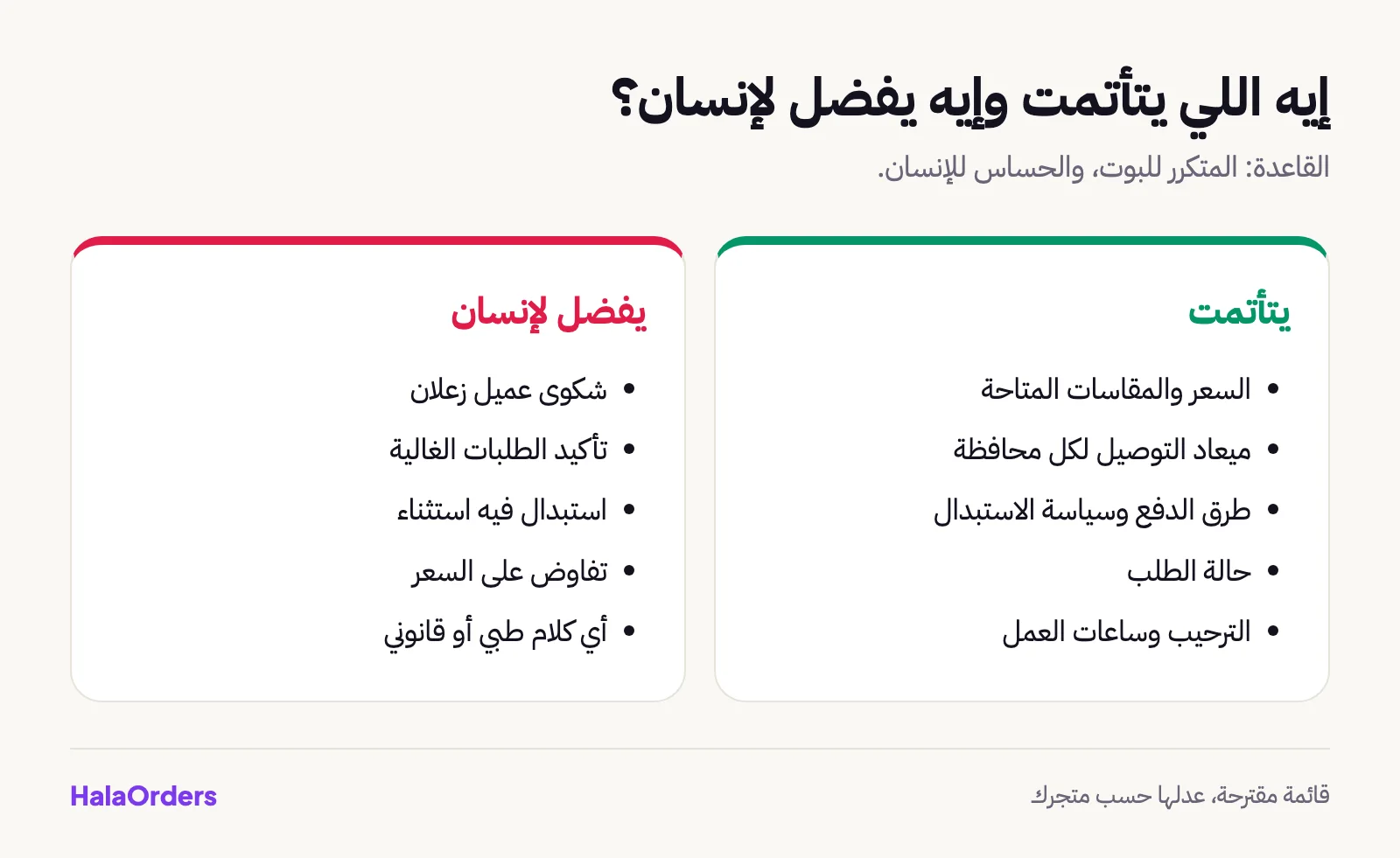
| Automate | Leave to a person |
|---|---|
| The price and available sizes | A complaint from an upset customer |
| The approximate delivery time for each governorate | Confirming an expensive or suspicious order |
| Payment methods and the exchange policy (from written text) | An exchange or return with an exception |
| Order status (if connected to the shipping system) | Negotiating a price or discount |
| Working hours and the greeting message | Anything medical, legal or safety related |
With cash on delivery in particular, confirming the order yourself makes a difference: a short call or a personal message can save an order that was going to be refused. Read how to reduce fake orders.
Risks you need to know
- Wrong answers given with confidence: the bot may quote an old price or promise next-day delivery. Feed it reviewed text, and don't let it guess.
- Customer privacy: the name, address and phone go to an external tool. Read the privacy policy and enter as little as possible.
- The dialect: if the bot replies in stiff formal Arabic or in confusing language, the customer will feel they are talking to a machine. Test in Egyptian Arabic.
- No way out to a person: the worst thing is a customer going round in circles. There must be a button or a word that transfers them to a staff member.
- Cost: in some tools the subscription grows with the number of conversations, so calculate before you scale.
How do you prepare your frequent questions before any bot?
Any bot or ready reply is only as good as the information you feed it. So instead of looking for a tool, spend an hour going through the last two weeks of messages and write down the questions that repeated. You will usually find they revolve around 5 things: the price, the available sizes or colors, the delivery time and cost to the customer's governorate, payment methods, and the exchange policy.
Then write one short answer for each question, in Egyptian Arabic, with the actual figure (for example "delivery to Cairo and Giza is 50 EGP, in 2 to 3 days"). That answer is what you put in your quick replies, and if you use an AI tool it becomes the reference it relies on.
And review the answers whenever prices or shipping change. The most common mistake is the bot quoting the old offer price for a week after the offer ended.
How does HalaOrders help here?
HalaOrders is an Egyptian platform for building online stores and landing pages. It has no chatbot or WhatsApp automation, but it reduces the questions that reach you in the first place:
- Delivery fees for each governorate and city are shown to the customer before ordering, so the "how much is delivery to Assiut?" question disappears.
- Product variants (sizes and colors) and stock quantities, so customers see what is available themselves.
- Ordering without an account, and checkout fields you can edit, so the customer's details reach you complete.
- Automatic emails confirming the order to the customer, and Telegram notifications for every new order and a daily report for you.
- Cash on delivery with an optional deposit reduces refused orders.
- Team members with roles and permissions, where you decide what each staff member can see and edit, plus human support in Arabic and English.
See the plans and all the features.
The bottom line
A chatbot isn't a replacement for a customer service employee; it is a tool that answers the questions that repeat and frees your time for the things that need judgment. Start with the free tools (a greeting and quick replies), write down your frequent questions, test any tool in Egyptian Arabic before paying, and keep anything involving money or complaints with a person.
Frequently asked questions
What is an AI customer service chatbot?
A program that answers customers' frequent questions (price, size, shipping, order status) in their own words, from information you entered, and hands over to a staff member when the question gets complicated. The difference from a normal bot is that it understands phrasing, not just preset options.
What is the best chatbot tool for a small Egyptian store?
Start with the free WhatsApp Business and Meta tools: a greeting message and quick replies. If you need more, Tidio has a free plan and the paid one starts at 29 dollars a month according to its website, but make sure it understands Egyptian Arabic before subscribing.
Is Meta Business Agent available in Egypt?
Meta announced its global launch on June 3, 2026 on WhatsApp Business and Instagram, but the sources contain no list of countries or languages. Check inside your own WhatsApp Business account, and test it with questions in Egyptian Arabic before relying on it.
What should I never leave to the bot?
Complaints, confirming expensive or suspicious orders, exchanges with exceptions, price negotiations, and anything medical or legal. The bot answers the repeated questions only, and there must be a clear path to a person.
Can the bot get the price or policy wrong?
Yes, a bot can give a wrong answer with confidence (a hallucination). Reduce the risk by feeding it only reviewed text, updating prices promptly, and reviewing a sample of its conversations every week.