A TikTok video tells you "open a store and sell without buying stock or paying a single pound". That is half true. It is true that you don't buy goods before you sell, but you will pay for ads, pay shipping on refused orders, and carry the supplier's mistake in front of an angry customer.
In this article we explain dropshipping in Egypt as if you were sitting with an experienced merchant: what it is, how it works with cash on delivery, a local supplier or importing from China, and whether the numbers actually produce a profit, with a worked example.
In short: dropshipping in Egypt means selling products from your store without holding them, while the supplier prepares the order and ships it to the customer, and you keep the difference between the selling price and the supplier's price. The best model for a beginner is a local supplier with cash on delivery, but the margin is thin, and the share of orders actually delivered decides whether you make or lose money.
What is dropshipping?
Dropshipping is an e-commerce model in which the merchant doesn't keep stock, buys the product from a supplier after the customer orders it, and the supplier prepares the order or ships it directly to the customer. So your capital isn't in goods, it is in ads and customer service.
The difference from a normal store is that in a normal store you buy 50 pieces and wait for them to sell, while in dropshipping you buy piece by piece after each order.
How does dropshipping work in Egypt?
The picture in Egypt is different from the US because most orders are cash on delivery. According to P&S Intelligence, cash on delivery was the largest payment method, with a 45% share of the Egyptian e-commerce market in 2024. That means the customer pays the courier, not you.
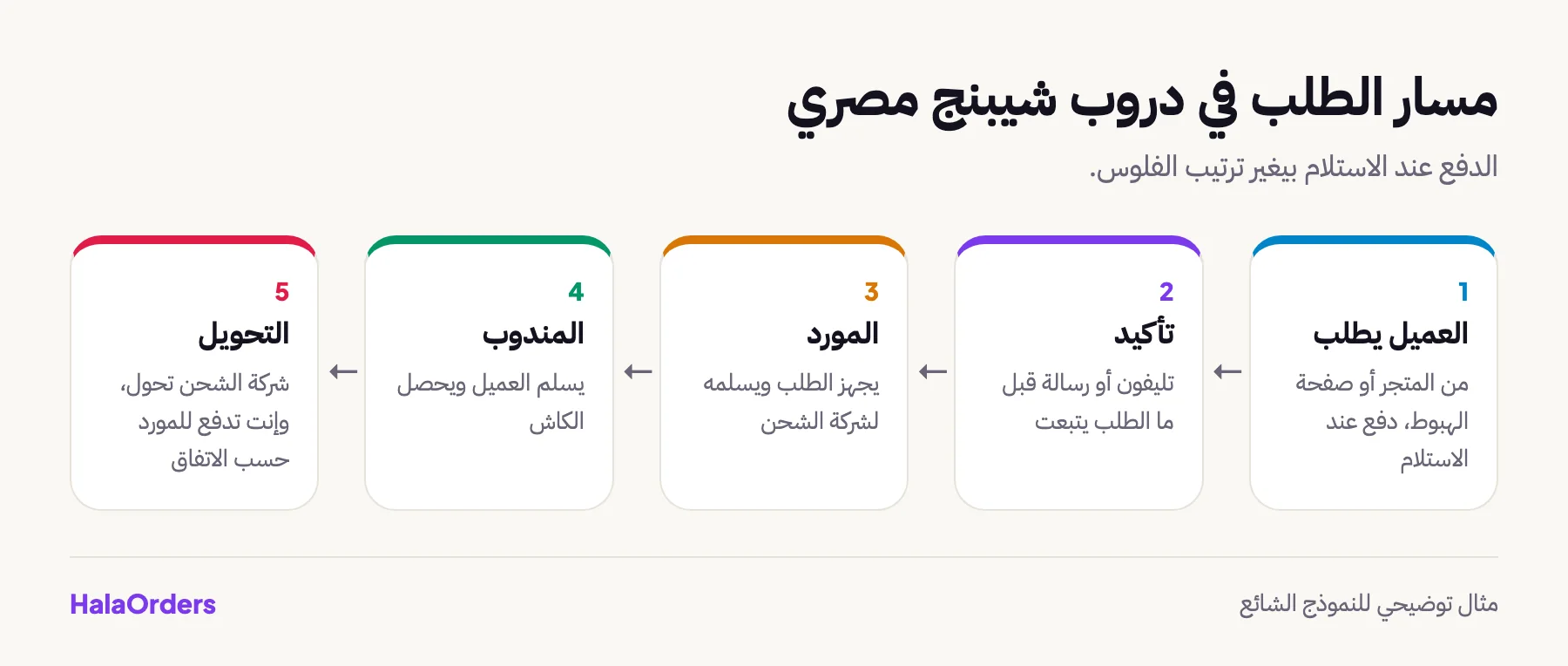
The steps in order:
- The customer orders from your store or landing page and chooses cash on delivery.
- You confirm the order by phone or message.
- You send the order details to the supplier.
- The supplier prepares the order and hands it to the shipping company (or ships it themselves).
- The courier delivers to the customer and collects the amount.
- The shipping company transfers the cash on its schedule, and then you settle with the supplier.
Do you pay the supplier before or after? That is agreed with them. Some suppliers take the amount after delivery, and some ask for it before shipping. Ask and write the agreement down, because it decides how much capital you actually need.
A local supplier or importing?
| Local supplier (Egypt) | Importing (China and elsewhere) | |
|---|---|---|
| Delivery time | Days | Weeks |
| Quality | You can see and try it | You must order a sample and wait |
| Customs and fees | None | Charged on imported shipments, and they change |
| Exchanges and returns | Easier | Complicated and costly |
| Margin | Thinner (high competition) | Higher on paper |
| Risk | The supplier may run out of stock | Delays, size differences, being held at customs |
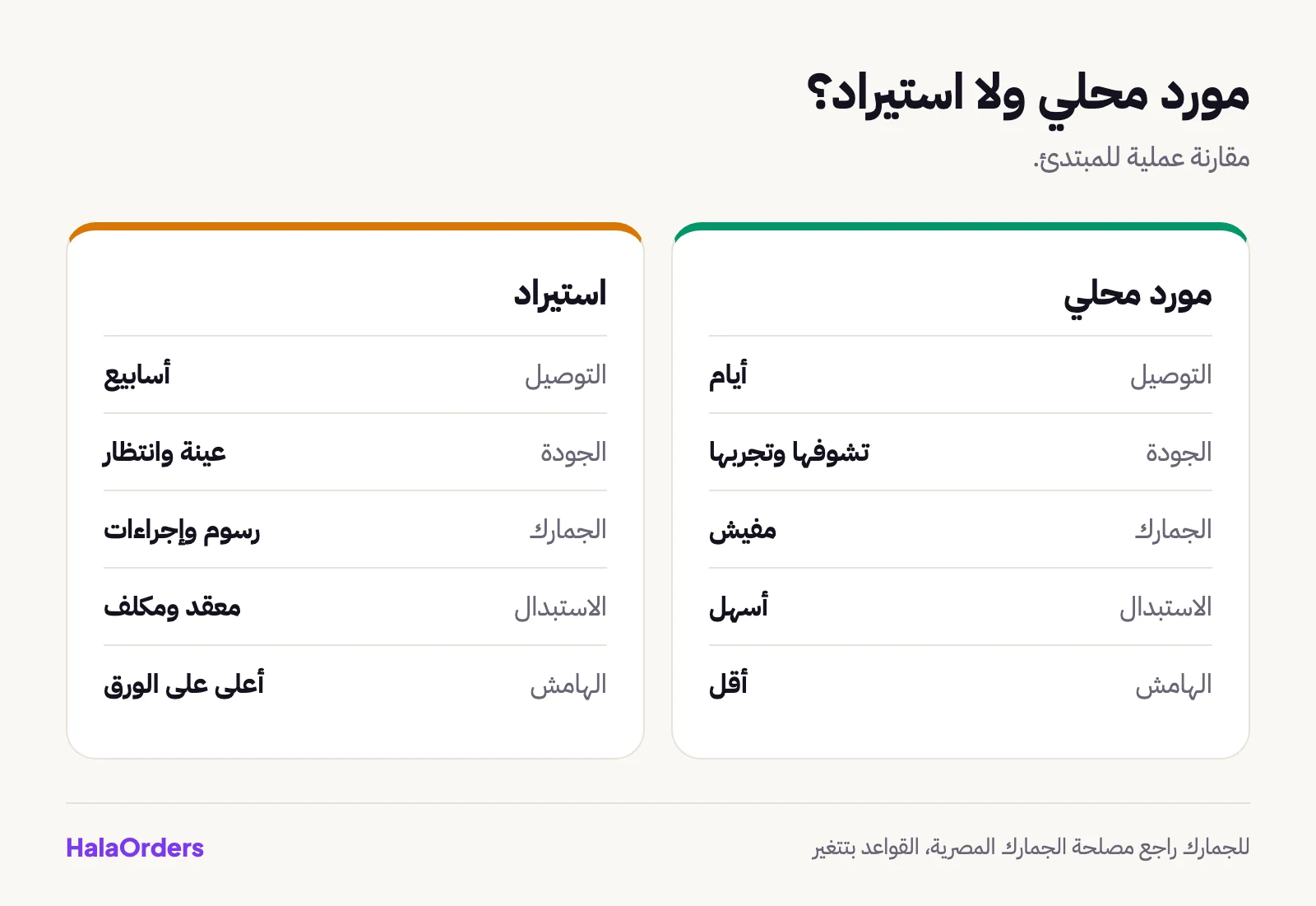
For a beginner, start with a local supplier. Delivery takes days and Egyptian customers wait days, not weeks, which reduces refusals and complaints. As for customs fees and procedures on imported shipments, check the Egyptian Customs Authority website or a customs broker before you order, because the rules change and can't be calculated by guessing.
Is dropshipping profitable? The numbers
Take this example (hypothetical numbers for illustration):
- Selling price to the customer: 450 EGP
- Supplier price: 230 EGP
- Shipping you cover: 60 EGP
- Ad cost per reported order: 100 EGP
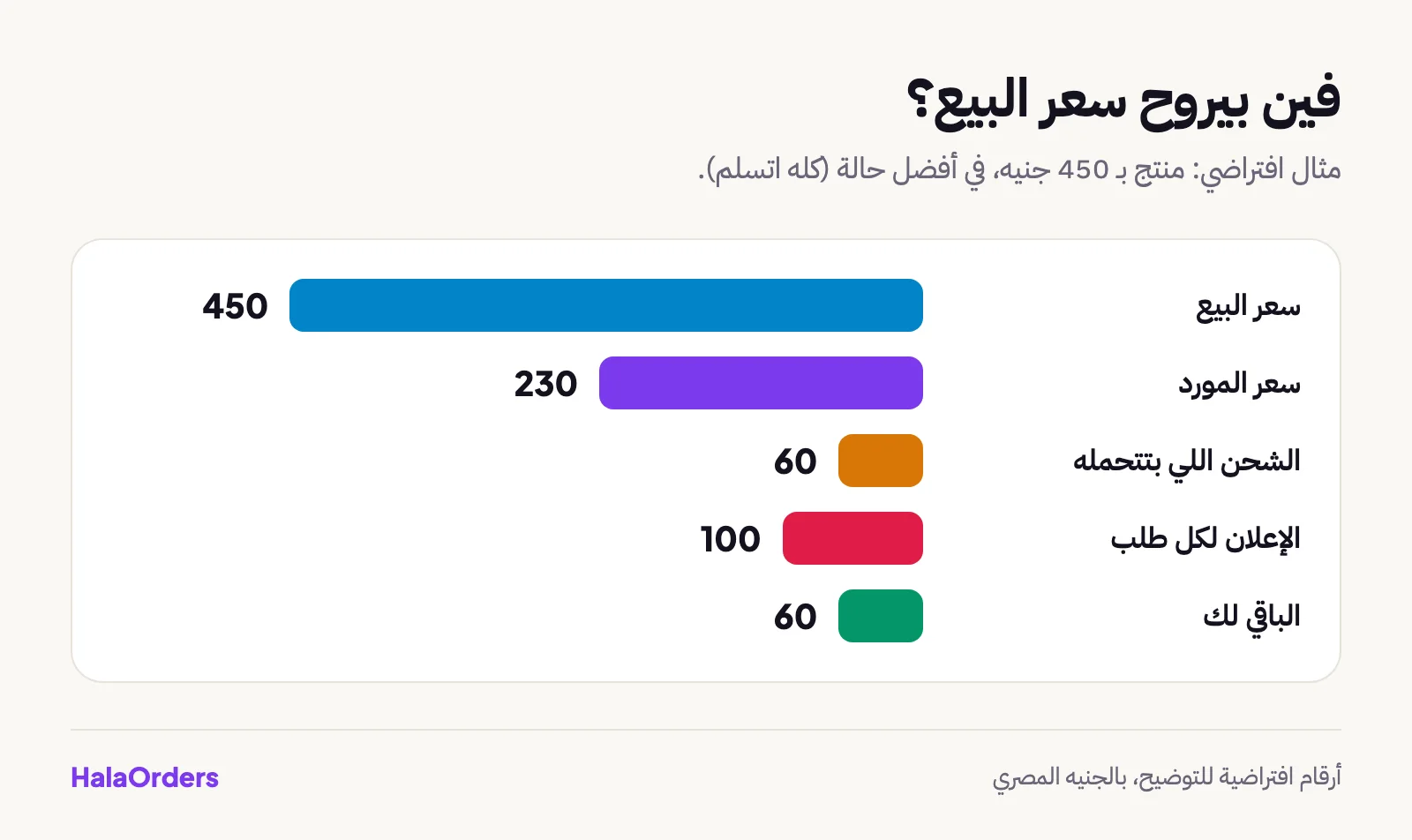
In the best case (every order delivered), 60 EGP per order is left for you. But a refused order isn't free: the ad money was spent, the shipping company takes its fee (we assumed 60 EGP), and there is no sale. So the equation changes sharply with the delivery rate.
Example: you spent 10,000 EGP on ads and got 100 orders. The margin per delivered piece before ads is 160 EGP (450 minus 230 minus 60).
| Delivery rate | Delivered orders | Profit from delivered | Refusal loss | Ads | Net |
|---|---|---|---|---|---|
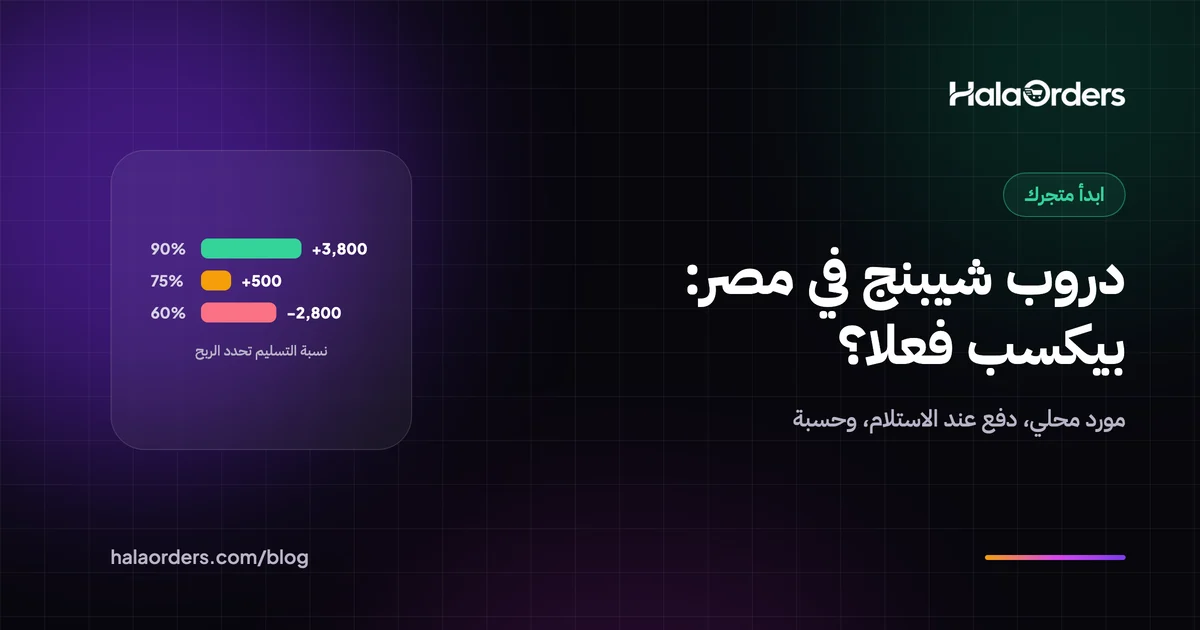
| 90% | 90 | 14,400 | 600 | 10,000 | +3,800 EGP |
| 75% | 75 | 12,000 | 1,500 | 10,000 | +500 EGP |
| 60% | 60 | 9,600 | 2,400 | 10,000 | -2,800 EGP |
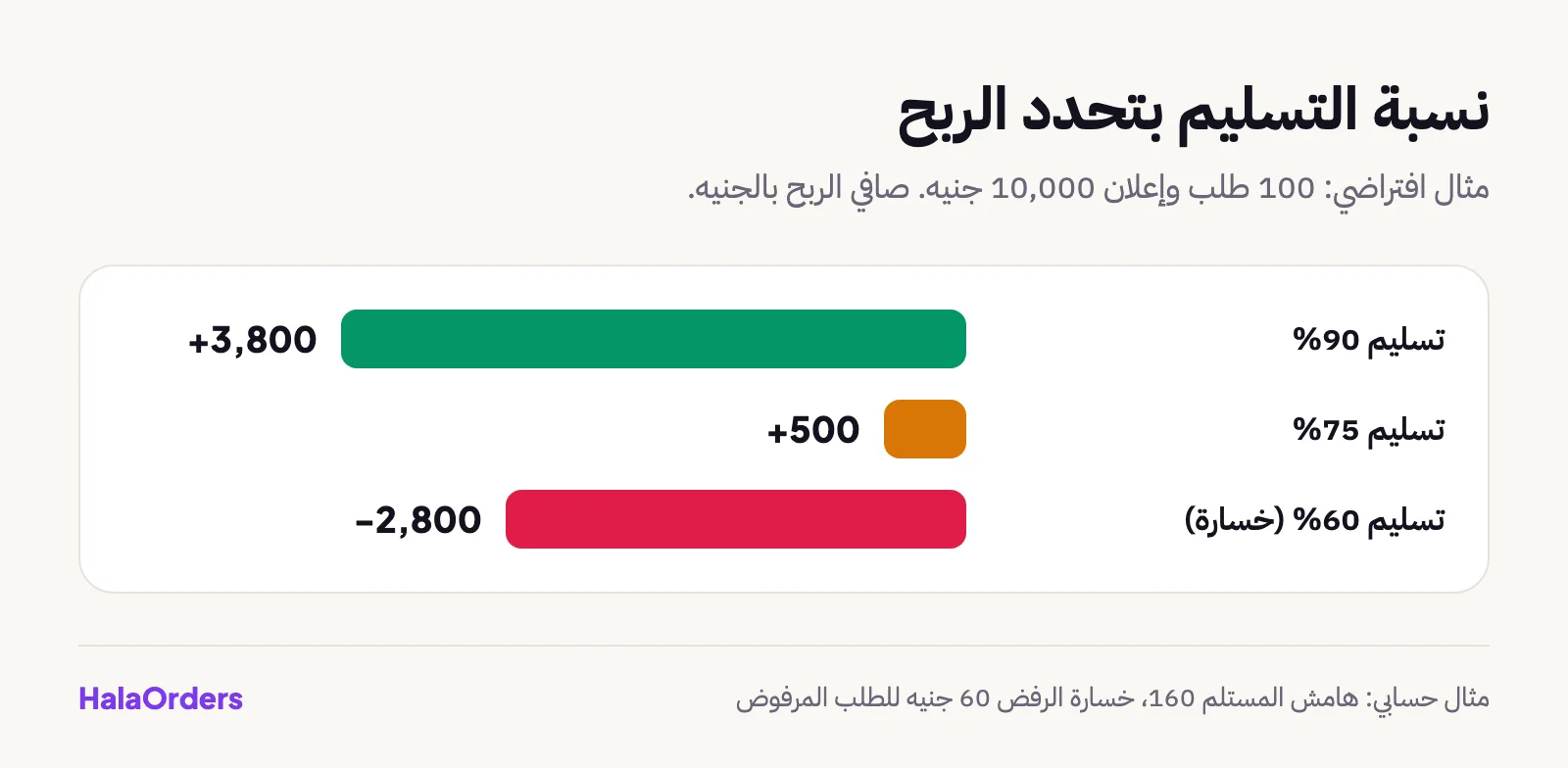
The difference between 90% and 60% delivery is the difference between profit and loss with exactly the same ad. That is why dropshipping in Egypt isn't just an ad game, it is a game of confirmation and delivery. Read how to reduce fake orders before you spend, and put your product's real numbers into the profit calculator.
Risks to plan for
- Stock: the supplier may run out of the item after the customer has ordered. The customer blames you.
- Quality: you are selling on your reputation, and the product may arrive different from the photo. Order a sample first.
- Relying on one supplier: build an alternative for every main product.
- A thin margin: if the product is sold by 20 other stores with the same photo, you will compete on price and lose.
- Customer service: complaints come to you, even if the mistake was the supplier's or the shipping company's.
- The legal and tax side: registering the activity and taxes need an accountant and official sources, and we can't give you advice on that.
How do you choose a product and a supplier?
A product that suits dropshipping: priced roughly between 300 and 1,000 EGP (with a margin that can carry ads and shipping), light, unbreakable, and not needing a precise size. See the best products to sell online in Egypt for the selection criteria.
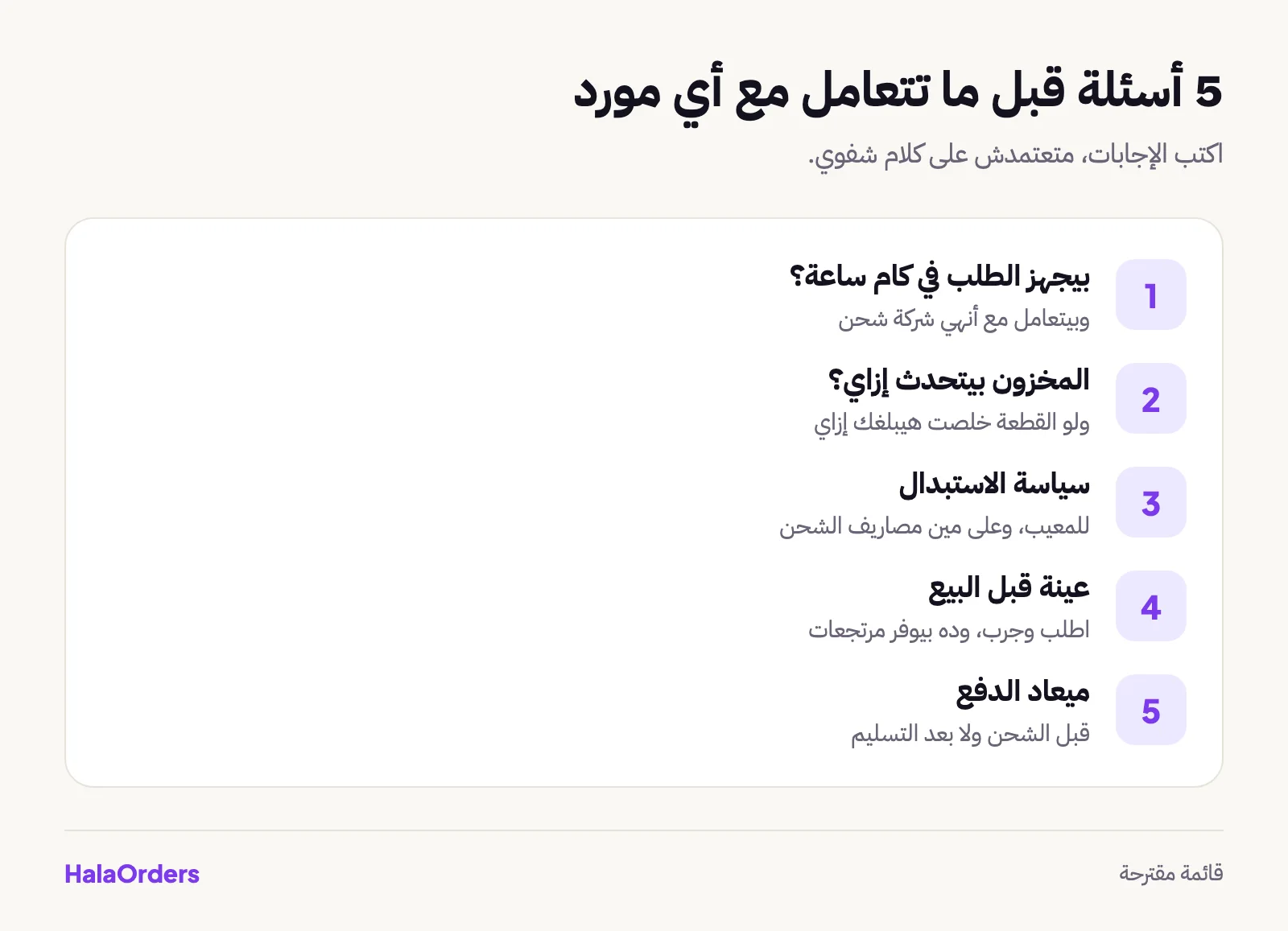
Questions to ask any supplier:
- How many hours does it take you to prepare an order? And which shipping company do you work with?
- How is stock updated, and if it runs out, how will you tell me?
- Is there an exchange for defective items? And who pays the shipping?
- Can I order a sample? At what price?
- When do I pay: before shipping or after delivery?
Common mistakes that cost new merchants
The first mistake is pricing based on the supplier's price alone. If you buy at 230 and sell at 300, the 70 EGP will go on ads and shipping before you notice. Calculate your margin on the product after all expenses, not before.
The second mistake is advertising without checking that the supplier has enough stock. Imagine you spent 3,000 EGP on ads and got 40 orders, and the supplier has 15 pieces. You will have to cancel orders and carry a bad reputation.
The third is leaving orders unconfirmed. With cash on delivery, an unconfirmed order raises the chance of refusal, and you pay for the shipment that comes back. Even if there is no time for a call, a short message confirming the address and size makes a difference.
And finally, don't put all your eggs in one product. Test two or three products on a small budget, and continue with the one with the higher delivery rate, not the one with the cheaper ad.
How does HalaOrders help?
HalaOrders is an Egyptian platform for building online stores and landing pages. For a dropshipping store:
- A store with a ready design in Arabic and English, with a custom domain and free SSL, that you can open from your phone (start your store).
- Products with variants (sizes and colors), stock quantities and an alert when stock runs low, so you can keep in sync with what the supplier tells you.
- Cash on delivery with an optional deposit, and delivery fees set per governorate and city and shown to the customer before ordering.
- Landing pages for a single product with the order form on the page, with automatic A/B testing.
- Telegram notifications for every new order and a daily report, so you can tell the supplier quickly.
- A Sky Express connection to create, track and cancel shipments from the dashboard, if you do the shipping.
- Team members with roles and permissions, promo codes, and the Meta and TikTok pixels.
If you are still deciding how much to start with, read how to start an online business with little capital, and see the plans.
Steps to start with
- Choose one product, and check its margin after ads and shipping.
- Order a sample from 2 to 3 suppliers and compare.
- Agree with the supplier in writing on preparation, stock, exchanges and payment.
- Make a landing page for the product and try an ad on a small budget (the Facebook and Instagram ads guide).
- Confirm every order by phone before sending it to the supplier.
- Measure the delivery rate weekly before increasing the budget.
The bottom line
Dropshipping in Egypt lowers the capital you put into goods, but it puts the pressure on ads, confirmation and delivery. Start with a local supplier and one product, calculate profit on delivered orders, and don't increase your ads before the delivery rate settles.
Frequently asked questions
What is dropshipping and how does it work in Egypt?
Dropshipping means selling products from your store without stock, while the supplier prepares the order and ships it to the customer. In Egypt the order is usually cash on delivery: the courier collects the amount, the shipping company transfers it, and you pay the supplier according to your agreement.
Is dropshipping in Egypt really profitable?
It can be, but the margin is thin. In a hypothetical example (selling at 450, supplier at 230, shipping at 60 and ads at 100 per order), 100 orders at 90% delivery give you about +3,800 EGP, while at 60% delivery you lose about 2,800 EGP. The delivery rate is what decides.
Is a local supplier or importing better?
For a beginner, local is better: delivery in days, easier inspection, simpler exchanges and no customs. Importing has a higher margin but is slower, with quality and customs risks. Check with the Egyptian Customs Authority before any import.
How much capital do I need to start dropshipping?
You don't need stock, but you need a budget for ads, testing, samples and refused shipping. Work it out from the product's margin: for example 10,000 EGP of ads for 100 orders in this example. It varies with your product and the supplier's price.
How do I reduce refused orders?
Confirm every order by phone before it is sent, use a deposit on expensive orders or governorates with high refusal rates, and check the size and address. HalaOrders supports a deposit on cash on delivery (the delivery fee, a percentage or a fixed amount).