Most people who think of starting a clothing brand begin with the fun part: the brand name, the logo and the T-shirt in their head. Two months later they discover the factory wants 300 pieces per design, the fabric they saw isn't available in the same quality, and the sizes that came out don't match the "size chart".
The truth is that starting a clothing brand in Egypt isn't hard to get into, because we have fabric, factories and workshops everywhere. What is hard is making your first small batch without losing money, and selling it quickly. In this article we walk you from the idea to your first 100 pieces: how to choose the product and the factory, calculate the cost, get the sizes right, photograph and launch.
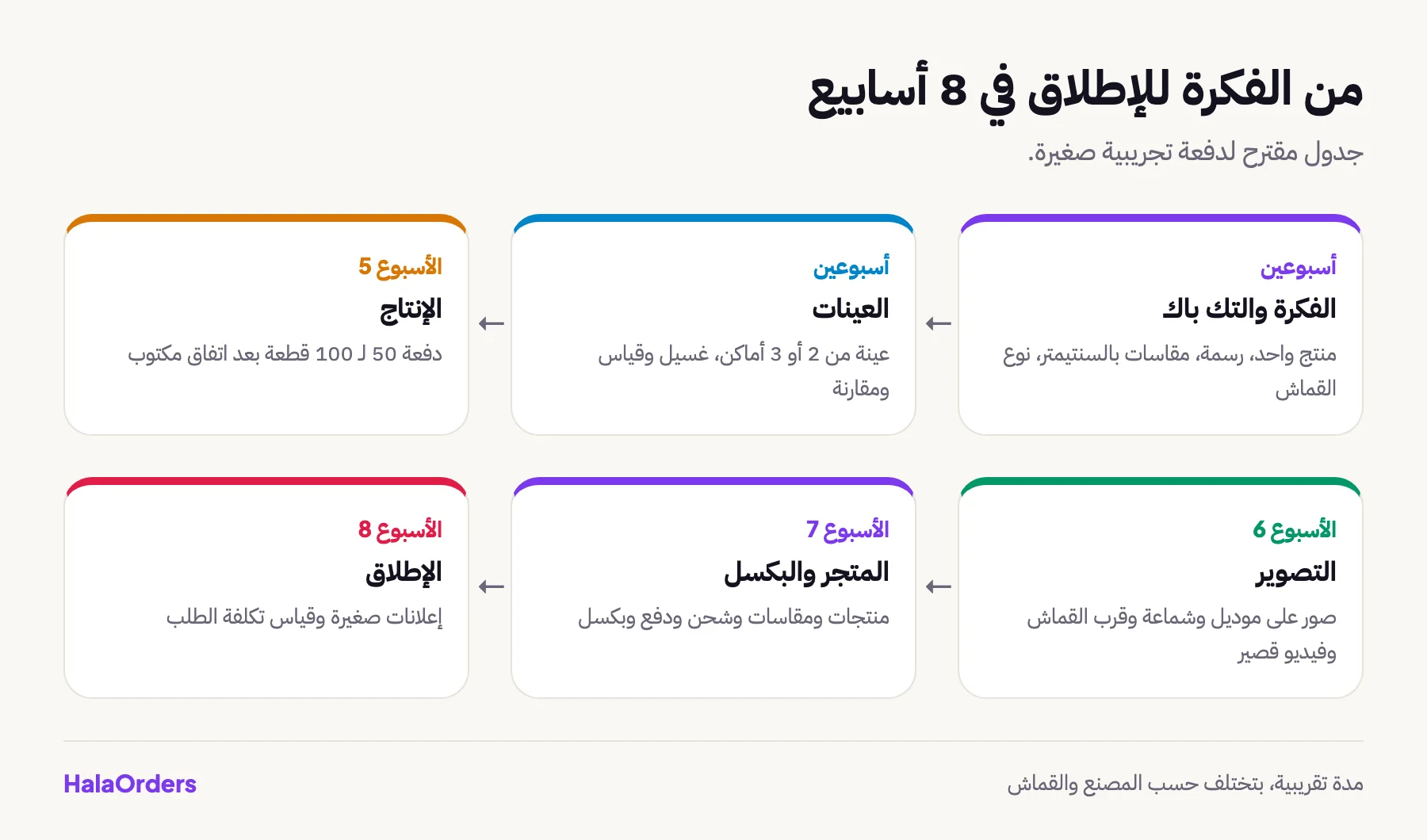
In short: to start a clothing brand in Egypt, begin with one or two products (an oversized T-shirt and a hoodie, for example), get samples from more than one workshop or factory, and calculate the full cost per piece before setting the price. Start with a test batch of 50 to 100 pieces, sell it through an online store and ads, and then repeat the design that sold.
How do I start a clothing brand from scratch? The steps
- Define your audience and your first product. Women over 20? University students? Veiled women? One clear product beats a scattered catalog.
- Sketch the design and make a simple "tech pack": a front and back drawing, the measurements in centimeters, the fabric type and weight, the color, and where the logo and label go.
- Look for fabric and manufacturing, and get samples from more than one place.
- Get the sizes right on a real body.
- Calculate the cost and set the price.
- Photograph, write the description and set up the store.
- Launch a small batch and measure.
Why is an Egyptian clothing brand an opportunity right now?
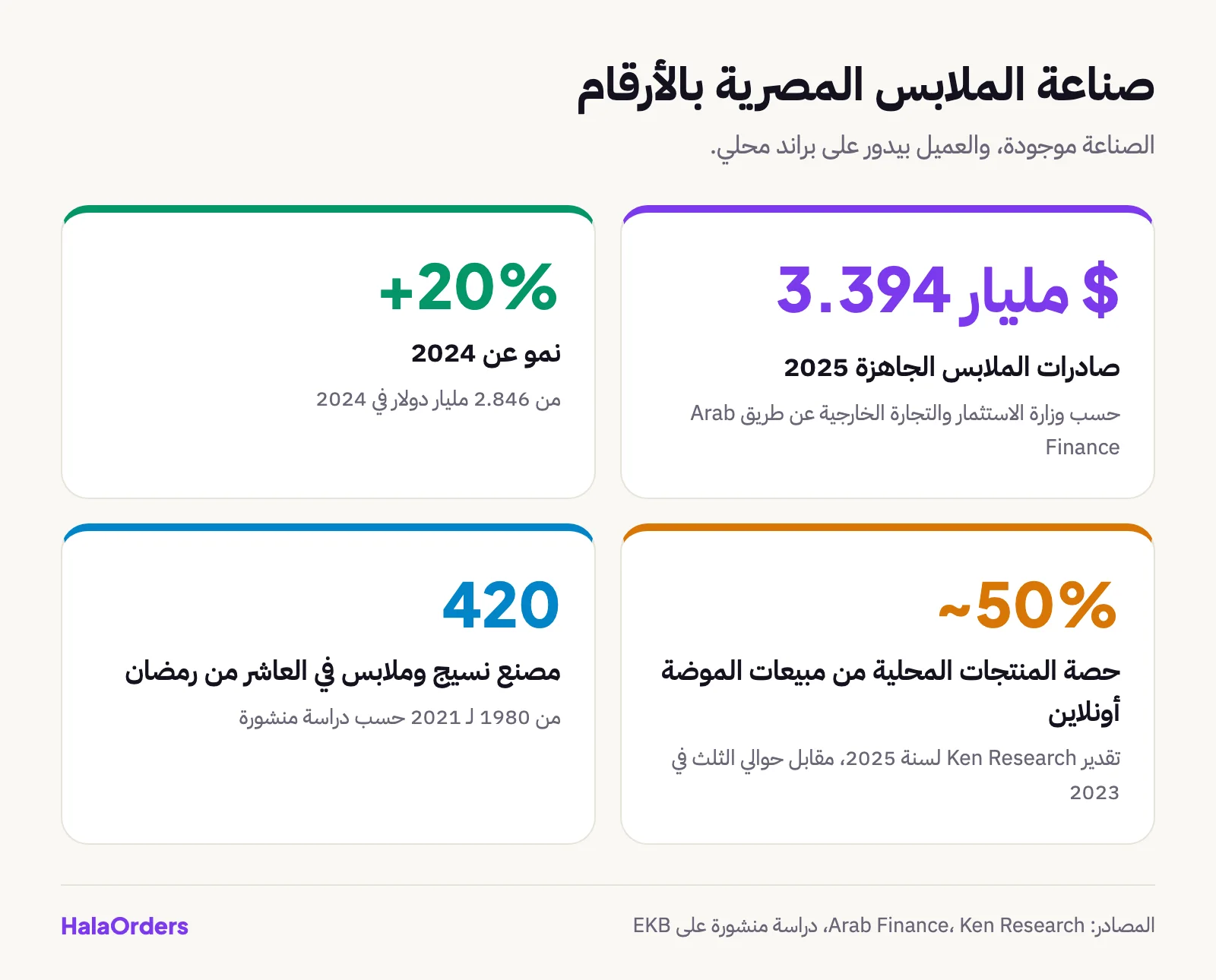
Egypt's ready-made garment industry is heading in the right direction. According to the Ministry of Investment and Foreign Trade via Arab Finance, Egyptian ready-made garment exports rose about 20% to 3.394 billion dollars in 2025, against 2.846 billion in 2024. So the expertise and factories exist, and as a small merchant you benefit from the same infrastructure.
At the same time, a Ken Research report estimates that local products grew from about a third of online clothing sales in 2023 to about half in 2025. The report comes from a commercial research firm, so treat it as a trend rather than a precise number, but any merchant can feel that customers now look for an Egyptian brand instead of expensive imports.
How do I choose my first product?
The best first product has three qualities: simple stitching (meaning fewer defects), flexible sizing, and a price that allows a good margin. The oversized T-shirt, the hoodie, wide-leg trousers and a light abaya are examples. A tailored dress, a suit and slim-fit jeans are harder, because any mistake in the cut ruins the piece.
Think about the product alongside the best products to sell online in Egypt, and check that the margin works before you go into production.
Where should I manufacture: a workshop, a factory or ready fabric?
| Option | Suits | Advantage | Drawback |
|---|---|---|---|
| A small workshop | The first 50 to 100 pieces | Accepts small quantities, with quick changes | Quality varies from batch to batch |
| A medium factory | Batches of 300 pieces or more | Consistent quality and organized production lines | Asks for large numbers and a deposit |
| Fabric from a trader + a tailor | Quick experiments | Cheap and flexible | You are responsible for every detail |
| A large export factory | A big brand | High quality | Usually doesn't suit beginners |
According to a published study on 10th of Ramadan City, the city has hundreds of textile and garment factories (420 factories from 1980 to 2021), which means factory options near Cairo are plentiful. And El Mahalla El Kubra is known for spinning and weaving if you need fabric in quantity. Ask around the market and through contacts in the industry, and don't rely only on those who advertise.
What is the minimum order quantity (MOQ)?
The minimum varies by place, type of garment and color, and there is no fixed official number. Small workshops accept less than factories, and sometimes the minimum is counted per color and per design, so 3 colors of the same T-shirt can multiply the quantity by 3. Ask directly: what is the minimum per color? What is the surcharge if the number is lower? And get the answer in writing.
How do I compare samples?
Order a sample from 2 to 3 places with the same tech pack, and compare:
- The fabric: wash it once and check the shrinkage and color, and whether it pills.
- The stitching: are the seams straight? Are the neck and sleeves done properly?
- The size: measure the piece with a tape and compare it with the tech pack.
- The time: how many days from order to delivery?
How do I calculate the cost per piece and the selling price?
This is the most important table in the article. The common mistake is calculating fabric and sewing only and forgetting the rest: printing, labels, packaging, defects and returns, and the ad cost per order.
An example (hypothetical numbers) for an oversized T-shirt selling at 450 EGP:
| Item | Cost per piece |
|---|---|
| Fabric | 95 EGP |
| Cutting and sewing | 60 EGP |
| Printing or embroidery | 25 EGP |
| Label, poly bag and packaging | 15 EGP |
| Share of defects and returns | 10 EGP |
| Production cost | 205 EGP |
| Ads per order | 100 EGP |
| Allowance for refused orders | 30 EGP |
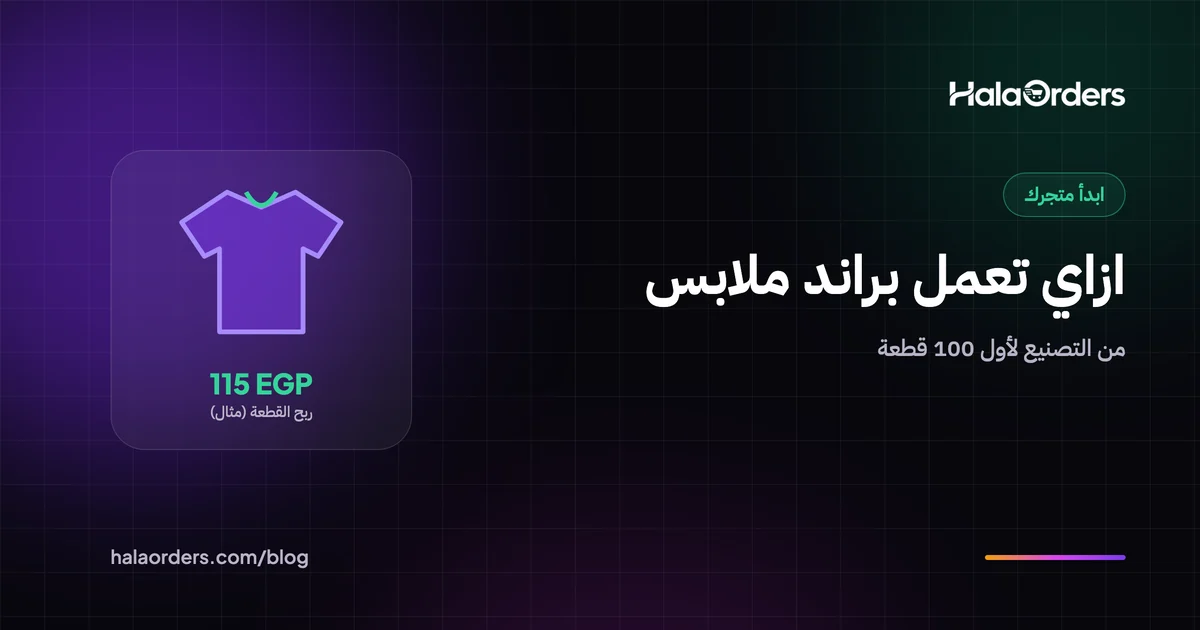
| Net profit per order | 115 EGP (about 26%) |
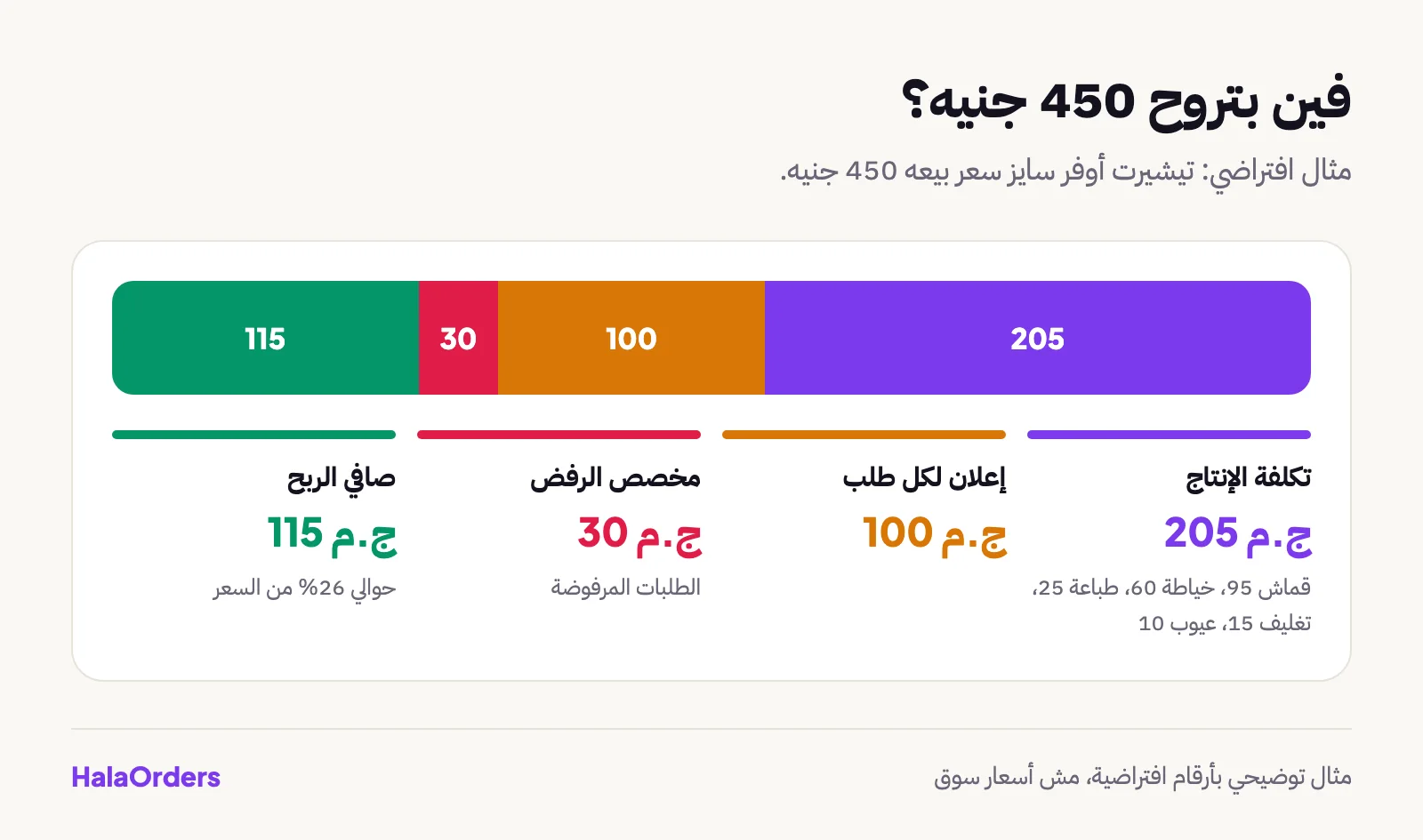
Try your own numbers in the profit calculator. If the profit after all this is under 15%, change the fabric or the price before you produce.
How does a 50,000 EGP budget split?
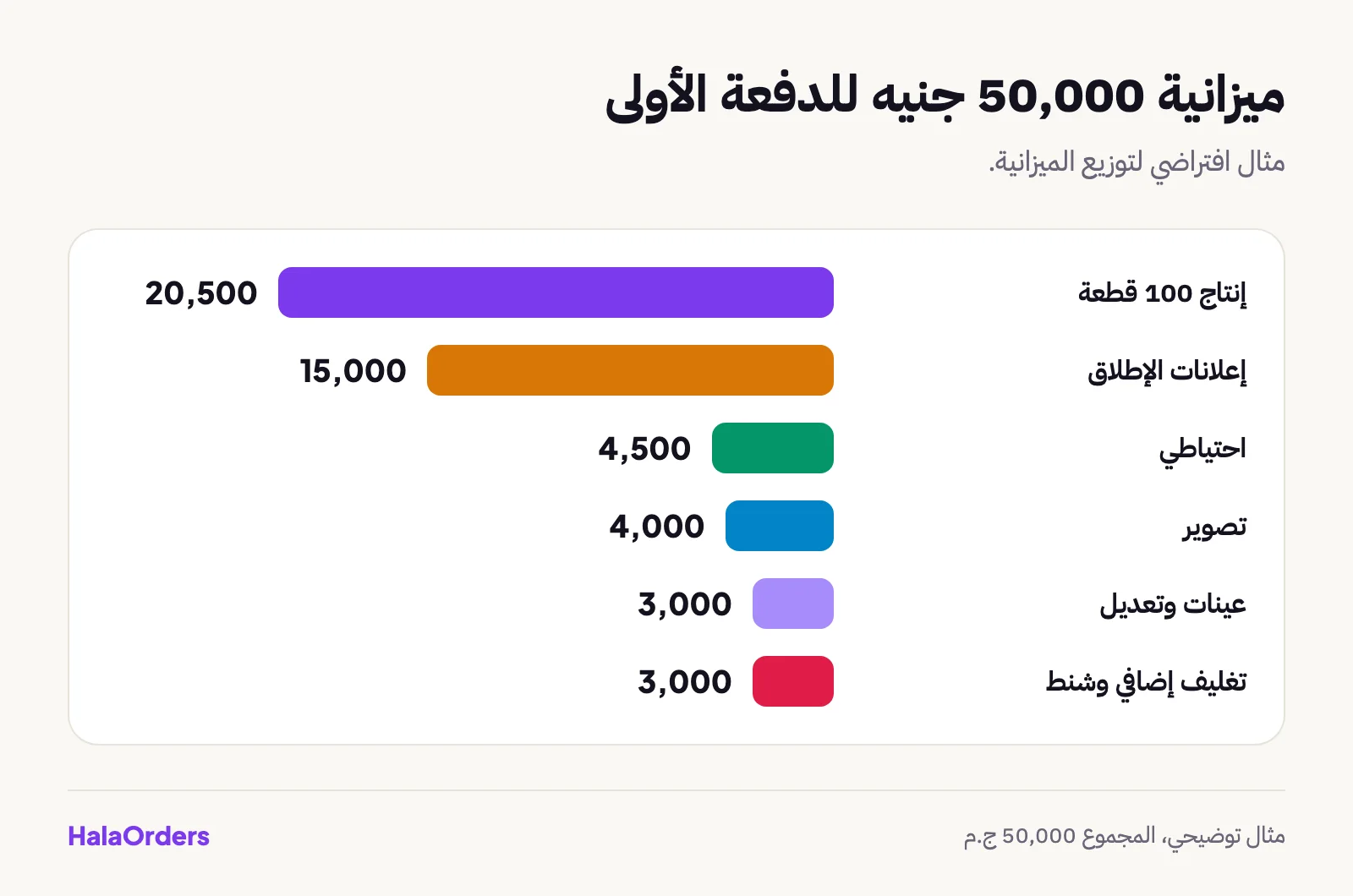
A hypothetical example:
- Producing 100 pieces: 20,500 EGP.
- Samples and adjustments: 3,000 EGP.
- Photography: 4,000 EGP.
- Launch ads: 15,000 EGP.
- Extra packaging and bags: 3,000 EGP.
- Reserve: 4,500 EGP.
If your budget is smaller, see the plans in an online business with little capital.
Can I sell before producing the whole batch?
Yes, and it is the safest route if your money is limited. Make just one sample of each design, photograph it well, and run an ad or a "pre-order" post with delivery after 14 or 20 days. If you get 15 to 20 orders in a week, start production with a quantity that covers them plus a small extra. If nobody is interested, you have saved 20 thousand EGP of fabric.
But keep your delivery promise honest. A customer who waited 3 weeks with no reply won't come back, and a single comment from them under your ad can do more damage than a whole ad does good.
How do I get the sizes right?
Sizes are a big cause of returns in clothing. According to a Coresight Research survey of US apparel retailers, size and fit are the main reason for more than 50% of returns. The sample is American, but the idea applies here too, because there is no standard size across brands.
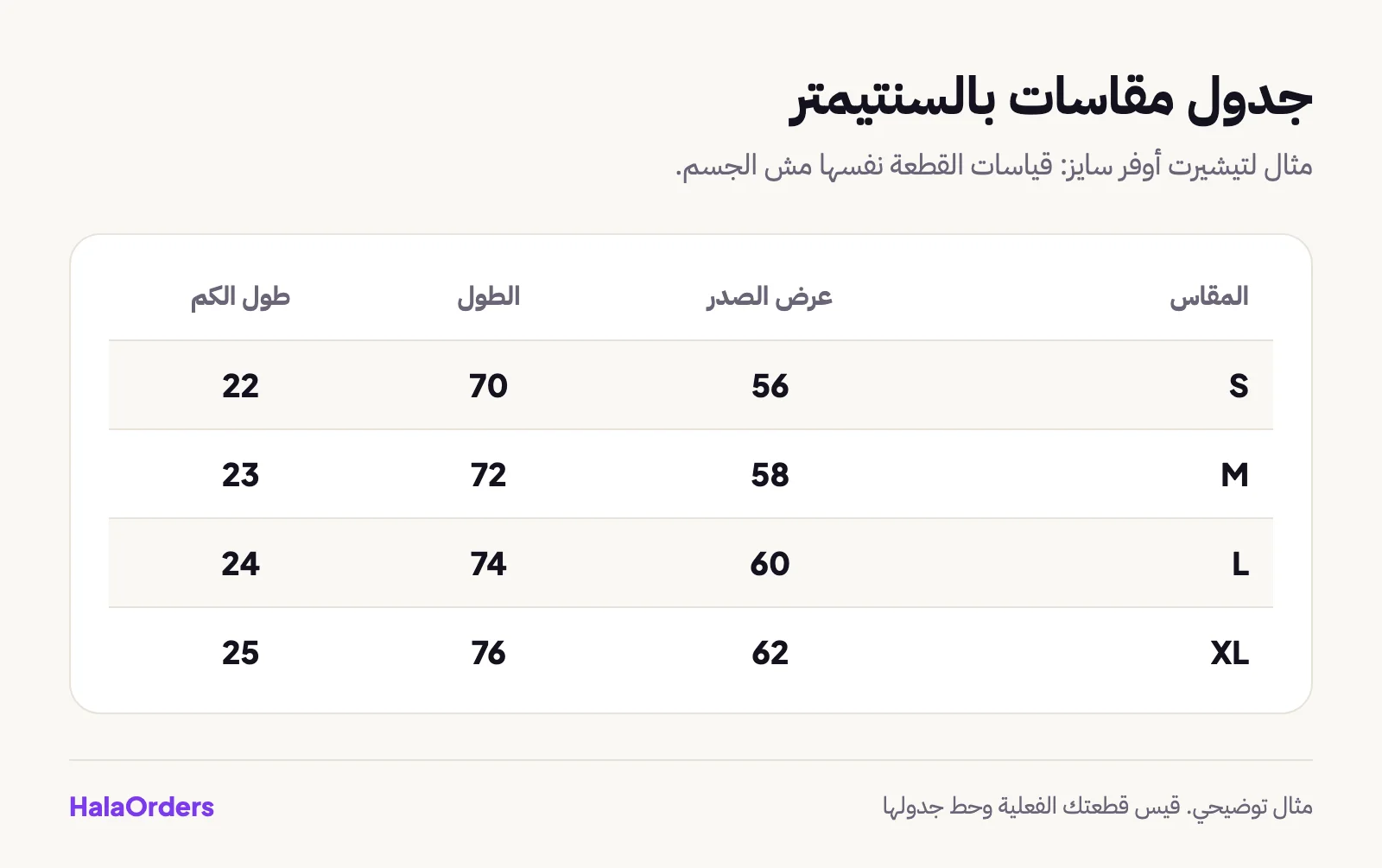
- Make a size chart in centimeters (chest width, length, sleeve), not just S, M and L.
- Give the measurements of the garment itself and measure against them, not just body measurements.
- Show the model's height and measurements in the photo ("the model is 170 cm and wears M").
- Try every size on a real person before production.
How do I photograph the product and prepare the page?
Photos are what will sell the piece, because the customer can't touch the fabric. Photograph the piece on a model and on a hanger, close up on the fabric and the seams, and a short 10-second video. Phone photos in daylight by a window with a plain background are enough to start, and if you want to improve the background with AI, see AI product photography. Write a description that answers: the fabric, the size, washing, and the exchange policy.
How does HalaOrders help you launch your brand?
HalaOrders is an Egyptian platform for building online stores and landing pages. For a new brand it helps with:
- A store in Arabic and English with themes and a mobile design, and a custom domain with free SSL. See the fashion store solution.
- Products with variants (sizes and colors), stock quantities and an alert when stock runs low, so you don't sell a size that has run out.
- Ordering without an account and delivery fees per governorate, with cash on delivery and a deposit, or InstaPay and Paymob.
- Connecting the Sky Express shipping company from the dashboard.
- Landing pages for a single product and a direct ad, with the Meta Pixel.
Open your store and see the plans.
The bottom line
A clothing brand is built with numbers before dreams: one simple product, samples from more than one place, a fully calculated cost, tested sizes and a small test batch. Start with 50 to 100 pieces, sell, and repeat only the winner.
Frequently asked questions
How much do I need to start a clothing brand in Egypt?
You can start with a test batch of 50 to 100 pieces of one design. A hypothetical example: a 50,000 EGP budget covers producing 100 T-shirts (about 20,500 EGP), samples, photography and launch ads. The real numbers vary with the fabric and the place.
What is the minimum order quantity at garment factories?
There is no fixed minimum; it varies by factory and type of garment. Many places count it per color and per design, so ask about the minimum per color and agree in writing. Small workshops usually suit the first batch better than large factories.
How do I calculate the selling price of a piece?
Add up fabric, sewing, printing, packaging and defects, add the ad cost per order and an allowance for refused orders, and then set the price. In the example: a cost of 205 EGP, ads of 100 and an allowance of 30, so the T-shirt at 450 EGP leaves 115 EGP of profit.
How do I reduce size returns?
Make a size chart in centimeters with the garment's own measurements, show the model's height and measurements in the photo, and try every size on a real body. According to Coresight Research, size and fit are the main reason for more than 50% of clothing returns for US retailers.
Should I sell on Instagram or through an online store?
Both: Instagram for reach and content, and the store for ordering, payment, shipping and tracking the numbers. Turning an Instagram page into a store saves you the orders that get lost in messages.