"What should I sell?" is the first question and the hardest one. And the answer you usually find is a list of the "50 most profitable products" written for another market, and a product like that turns into a loss in Egypt as soon as you calculate shipping, returns and ad costs.
The winning product in Egypt isn't the most expensive or the most famous one. It is the product whose margin can carry an ad, a return and shipping to a distant governorate. In this article you will find criteria to judge any product by, a rough rating of common categories, how to research and confirm there is demand, and what to stay away from.
In short: the best products to sell online in Egypt combine four things: a comfortable profit margin, light weight and cheap shipping, a low return risk, and a chance that the customer comes back to buy again. Categories such as accessories, bags, officially registered personal care and loungewear usually meet this, while furniture, large appliances and fragile products lose money fast. And before you buy stock, test demand with a small ad.
What criteria decide whether a product is worth it?
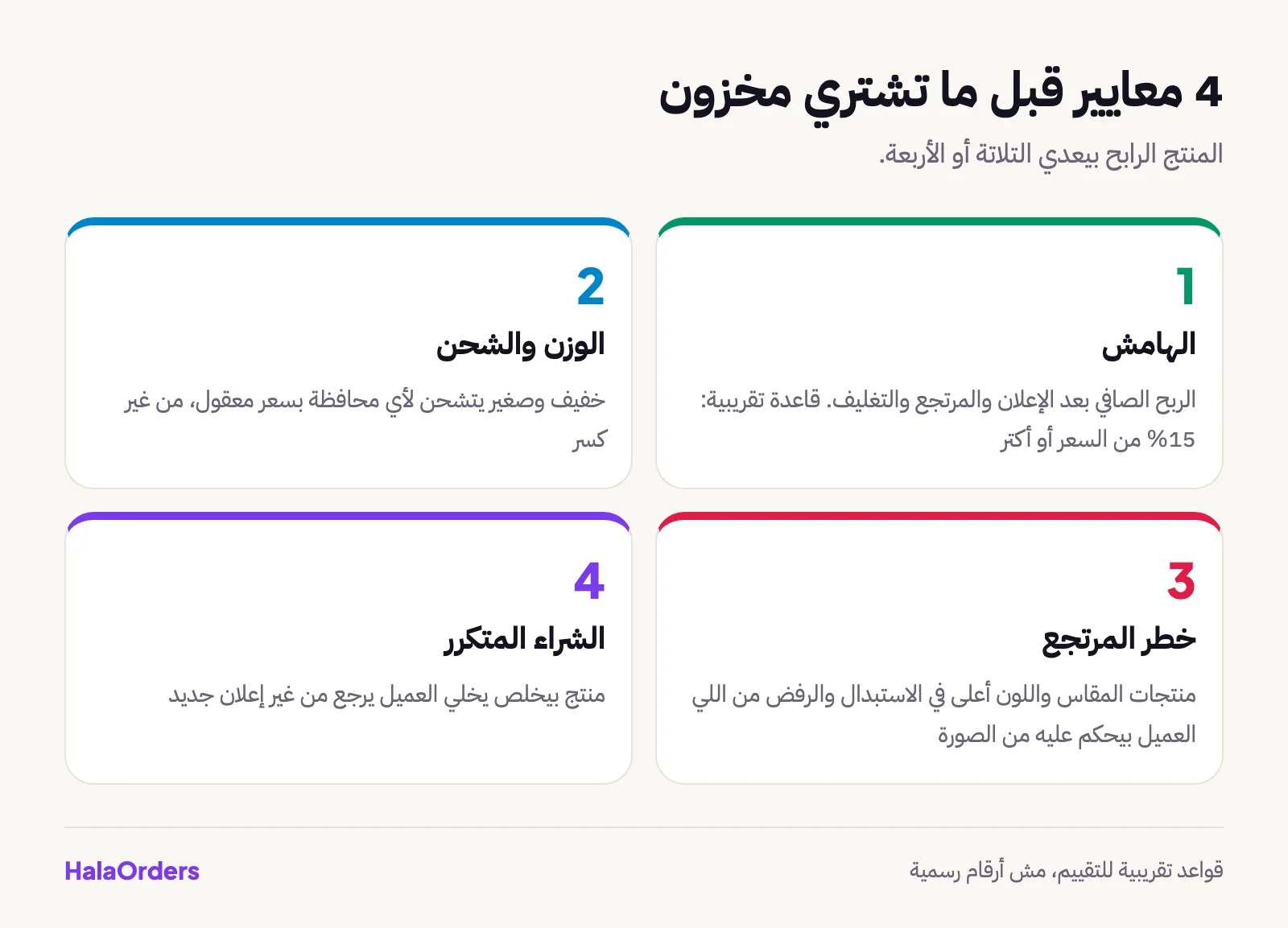
- Margin: the difference between the selling price and all the costs of the order (product, packaging, ads, returns). A rough rule: if the net profit is less than 15% of the selling price, any problem with the ads will put you at a loss.
- Weight and shipping: a small, light product ships to any governorate at a reasonable price. A heavy or bulky product raises the shipping cost and gets broken or delayed.
- Return risk: size and color products (clothing and shoes) have more exchanges and refusals. Products the customer can judge easily from the photo have fewer.
- Repeat purchases: a product that runs out (cream, perfume, coffee) brings the customer back without a new ad, which lowers the cost of acquiring customers. Read how to build returning customers.
Which categories suit selling online in Egypt best?
These are rough ratings for illustration, based on reasoning through the criteria, not sales data. Apply them to your own product.
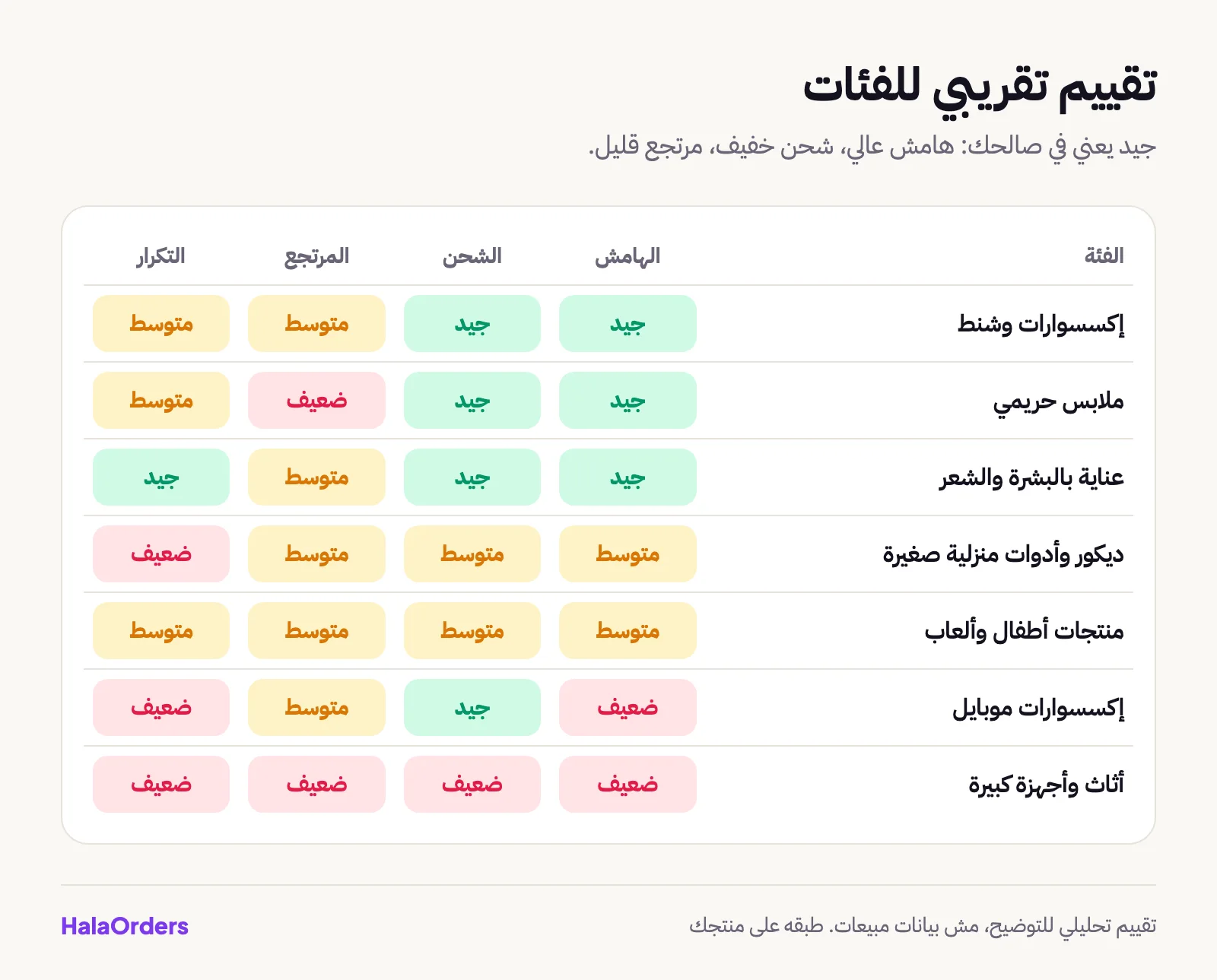
| Category | Margin | Shipping | Return risk | Repeat purchases | Note |
|---|---|---|---|---|---|
| Accessories and bags | High | Light | Medium | Medium | Easy to start with on a small budget |
| Women's clothing | High | Light | High | Medium | A size chart is essential |
| Skin and hair care | High | Light | Medium | High | The product must be officially registered |
| Decor and small home goods | Medium | Medium | Medium | Low | Breakage in shipping is the problem |
| Kids' products and toys | Medium | Medium | Medium | Medium | Occasions and holidays |
| Phone accessories and small electronics | Low | Light | Medium | Low | Fierce price competition |
| Furniture and large appliances | Low | Heavy | High | Low | Needs capital and experience |
If you are thinking of fashion, decor, handmade or beauty, see HalaOrders' solutions for fashion, home decor, handmade and beauty.
Why does each category behave differently?
- Accessories and bags: light, with a good margin and easy to photograph. The problem is there are many competitors, so packaging and photos make the difference.
- Women's clothing: demand is high, but size exchanges eat into profit. A clear size chart reduces the problem, and it helps to give the garment's measurements in centimeters.
- Skin and hair care: customers come back when the product runs out, which is the strongest advantage. But the product must be officially registered and the supplier must have its papers.
- Decor and small home goods: suitable for gifts and seasons, but breakage and packaging raise the cost.
- Kids and toys: demand rises during holidays and back to school. Make sure the product is safe and the supplier is reliable.
- Small electronics and phone accessories: prices are very close and customers compare quickly, so the margin shrinks.
- Furniture and large appliances: need special storage, shipping and after-sales service, and don't suit a start on a small budget.
And if you work in something specialized, handmade for example gives you the advantage that nobody sells exactly the same product, but production is limited, so work out your capacity before you advertise.
How do I calculate whether the product will really make money?
Looking good doesn't pay the ad bill. Calculate the profit per order with all its costs.
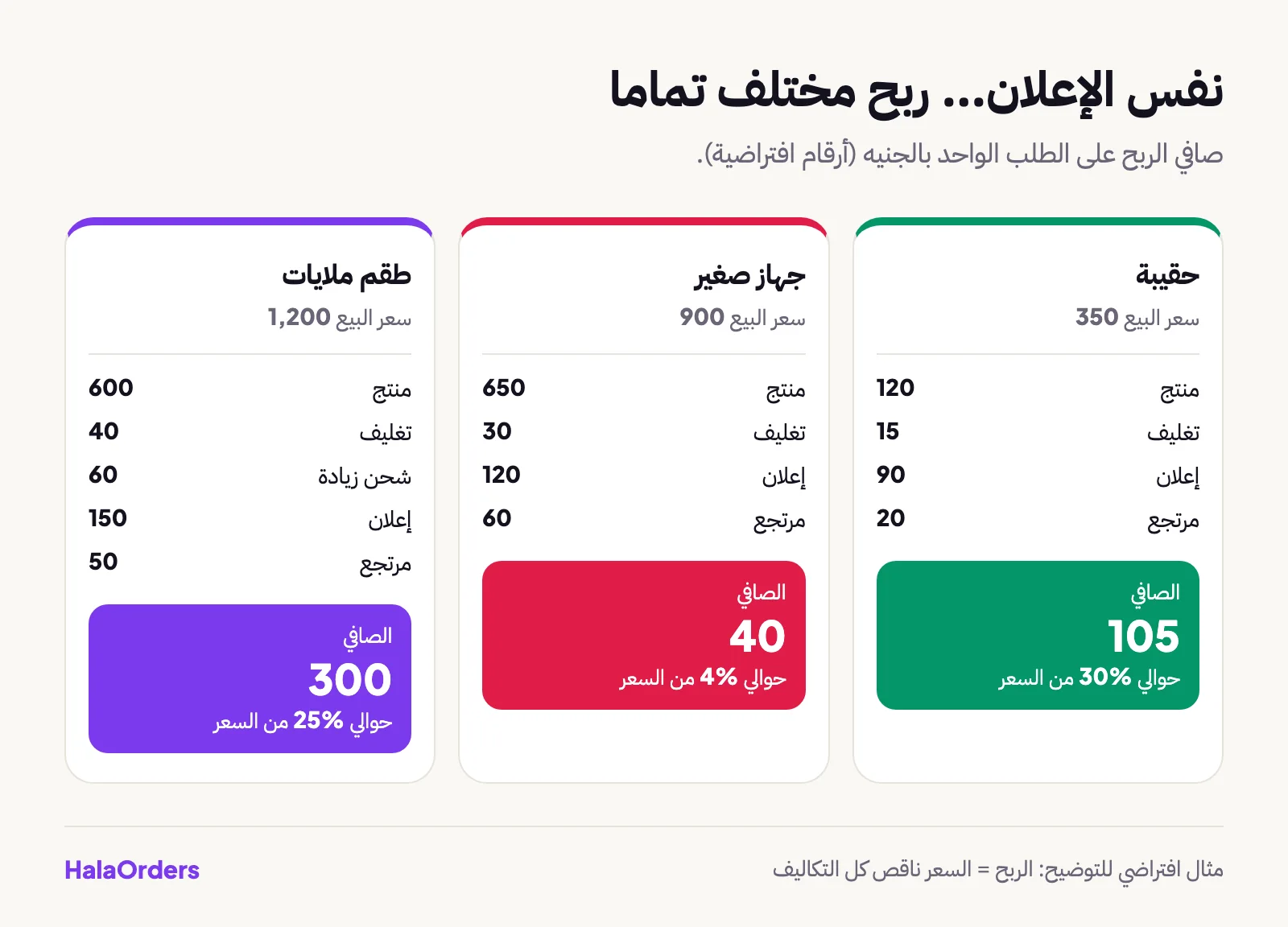
In this example (hypothetical numbers): the bag sells for 350 EGP and makes 105 after all costs. The small device sells for 900 EGP but makes only 40, because its cost is high and returns are expensive. The bedsheet set sells for 1,200 EGP and makes 300 even though shipping it costs more. So a higher price doesn't necessarily mean a higher profit; what matters is profit as a share of the price. Calculate your product in the profit calculator.
How do I look for a product and confirm there is demand?
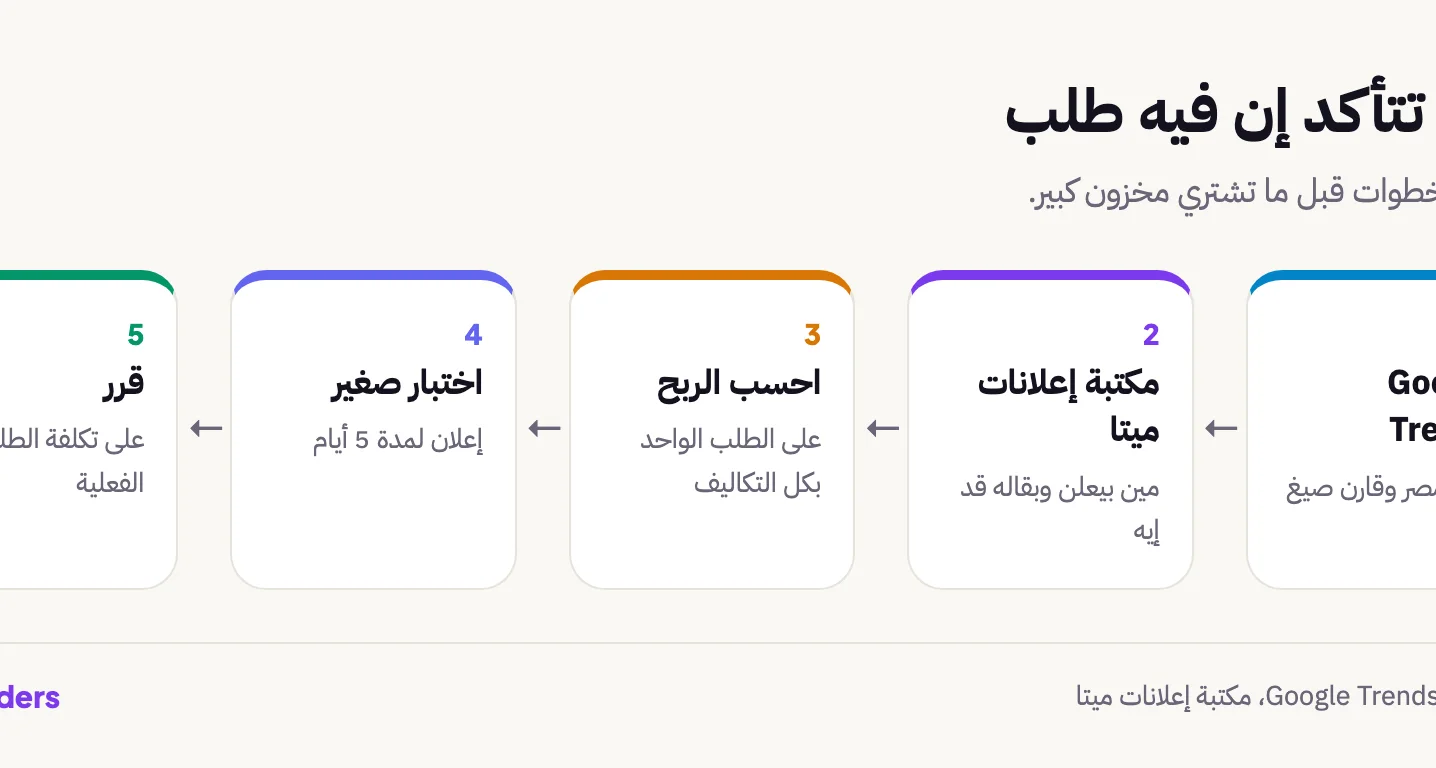
- Google Trends: type the product name in Arabic and choose Egypt as the location. The numbers are relative, not absolute (Google measures interest relative to the highest point in the comparison), and each spelling is counted separately, so compare the different spellings.
- The Meta Ad Library: search for the product and see who is advertising and for how long. An ad that has been running for months means its owner is making money.
- Calculate the profit with the criteria above.
- Test with a small ad for 5 days before buying a lot of stock. Read how to start your business with little capital.
- Decide based on the actual cost per order.
When does demand rise for certain categories?
Demand in Egypt moves with the seasons: Ramadan and the Eids, back to school, summer, and the year-end sale season. So a product can sit still one month and sell fast in another. Use Google Trends with a five-year range, not one month, see in which months interest rises, and prepare your stock weeks before the season, not in the middle of it.
What should I stay away from at the start?
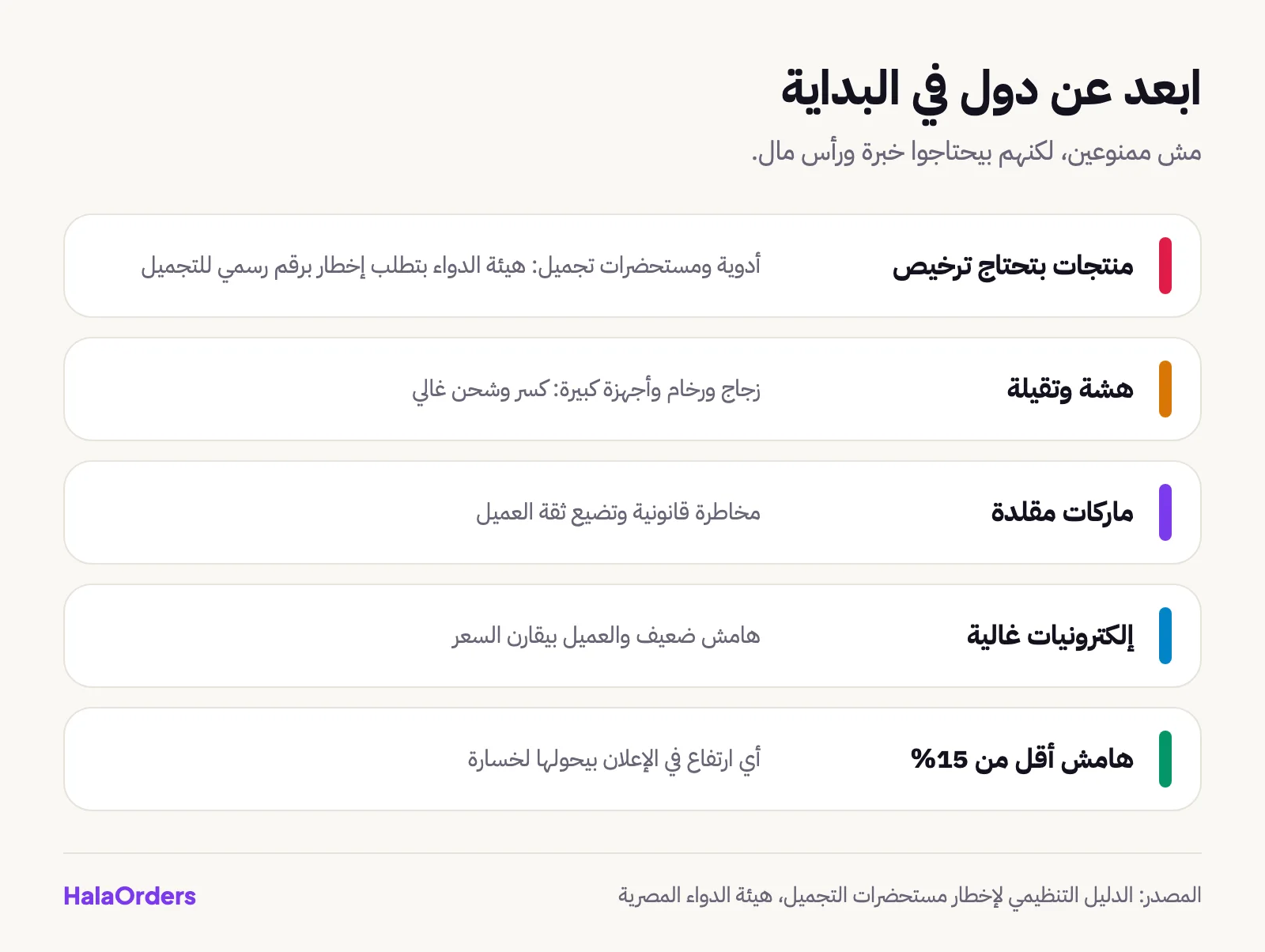
- Products that need a license or official registration: medicines and cosmetics. The Egyptian Drug Authority requires a notification with an official number for cosmetics before they are traded, so make sure the product is registered and the supplier has the papers.
- Fragile and heavy products: glass, marble and large appliances, because they break and are expensive to ship.
- Counterfeit brands: a legal risk, and a risk to customer trust.
- Expensive electronics at the start: the margin is thin and customers compare your price with everyone else's.
- Any product with a margin under 15% after all costs.
How can I compete in a crowded category?
You don't compete on price, you compete on something else: better packaging, clearer photos, a description that answers questions, a clear exchange guarantee and fast replies. And with cash on delivery, confirming before shipping reduces refusals, so read how to reduce fake cash-on-delivery orders.
How does HalaOrders help?
HalaOrders is an Egyptian platform for building online stores and landing pages. Once you have chosen your product:
- Products with variants (sizes and colors), stock quantities and an alert when stock runs low.
- Shipping fees for each governorate and city shown to the customer before ordering, and an integration with Sky Express.
- Landing pages to test a new product quickly, and A/B testing between four versions.
- Cash on delivery with a deposit for higher-priced products.
- Promo codes as a percentage or a fixed amount with a minimum order, useful for quantity offers.
- Google Merchant Center to show your products in Google Shopping.
- The plans and open your store.
And if you are thinking of AI tools to help with photos and descriptions: the map of AI tools and AI product photography.
The bottom line
Stay away from ready-made "most profitable product" lists. Judge any product by four criteria: margin, shipping, returns and repeat purchases. Research with Google Trends and the Meta Ad Library, calculate the profit per order with all costs, and test with a small ad before buying stock. A light product with a 25% net profit beats an expensive one that makes about 4%.
Frequently asked questions
What are the best products to sell online in Egypt?
The most suitable are light products with a comfortable margin and a low return risk: accessories and bags, loungewear, officially registered personal care. Furniture, large appliances and fragile products are harder because shipping is expensive and returns eat the profit. In every case, test demand with a small ad first.
How do I know a product has demand in Egypt?
Use Google Trends with Egypt selected, and check the Meta Ad Library to see who advertises the product and for how long. Then run a 5-day test ad and measure the cost per order. A real ad is more accurate than any estimate.
What is a good profit margin for a product?
A rough rule is that the net profit after ads, returns and packaging should be 15% or more of the selling price. Below that, any increase in ad costs can turn the order into a loss. Calculate it per order, not per month.
Should I sell beauty products online?
You can, but they must be officially registered. The Egyptian Drug Authority requires a notification and an official number for cosmetics. Make sure your supplier has the papers and that the product is allowed to be traded, because an unregistered product can expose you to fines and legal problems.
Should I start with one product or several?
Start with one product, or two from the same category. That lets you focus your ads and stock and learn the real numbers quickly. Once you find a product with a steady profit, add products that complement it.